
Galvanized Pipe Replacement in Greater Houston
Galvanized steel pipe was coated with zinc to slow rust, but that coating wears away. The pipe then rusts from the inside, narrowing until pressure drops and the water turns brown. There is no lasting repair for that. The fix is replacing it.
Signs You Need This
- Brown or rusty water.
- Pressure that keeps dropping.
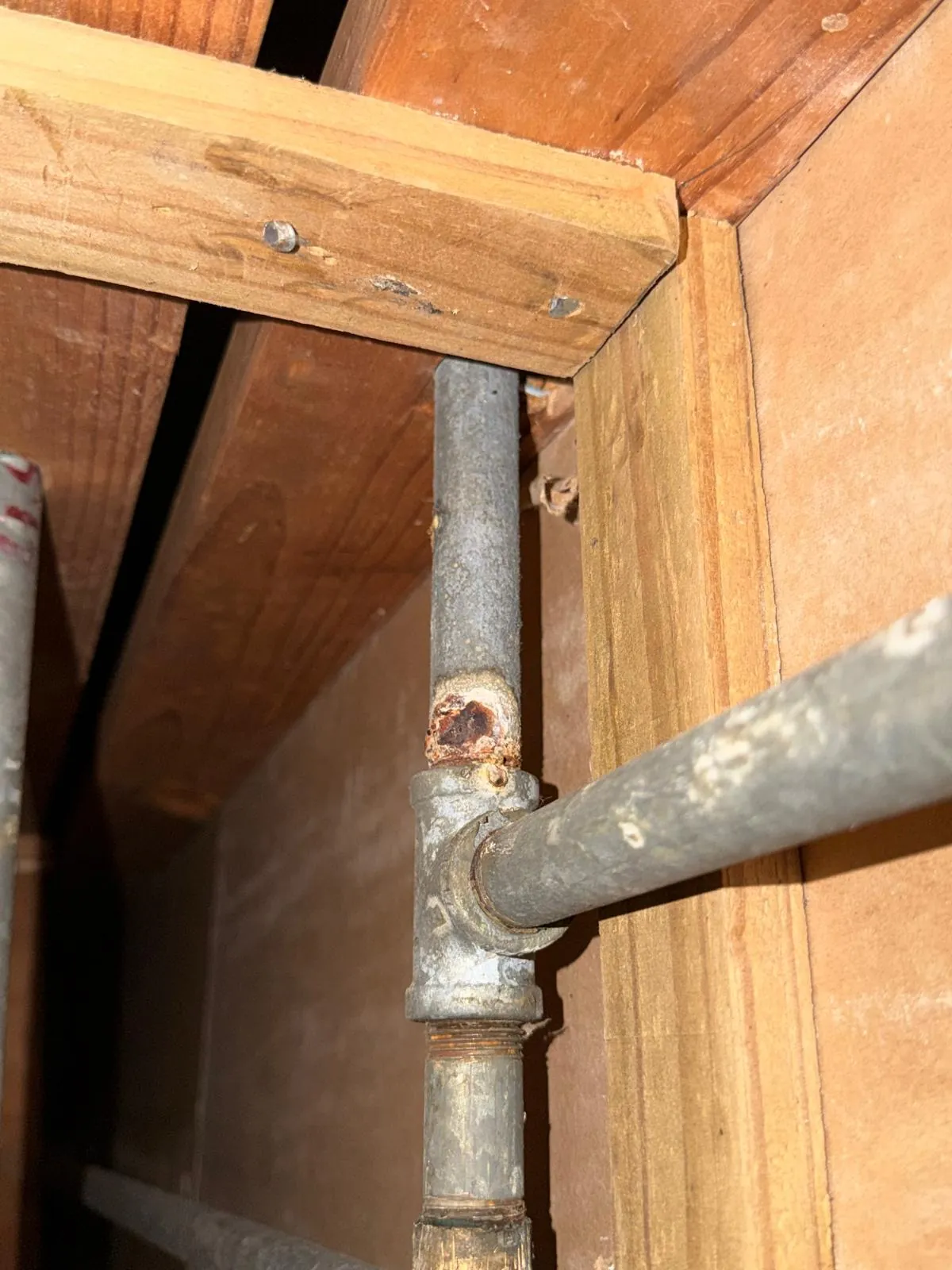
- Rust spots on attic pipes.
- Insurance or inspection flags.
How to tell if you have galvanized pipe
Check where the main line enters your home or look at the pipes in your attic. Galvanized pipe is dull gray and threaded at the joints, and a magnet will stick to it. Reddish-brown spots on the outside are a sign the inside is far worse.
Why it can’t wait forever
As the pipe walls thin, pinholes open behind drywall and in ceilings. Some insurers and home buyers also treat galvanized plumbing as a red flag. Replacing it on your schedule is far cheaper than replacing it after a leak floods a room.
Where We Work
We provide galvanized pipe replacement in The Woodlands, Spring, Houston, Tomball, Cypress, Klein, Conroe, Magnolia, Montgomery, Shenandoah, Oak Ridge North, Chateau Woods and the rest of our Greater Houston service area.
Your Repipe, Step By Step
A repipe sounds disruptive. Planned well, it’s a short, tidy project with one team accountable from the first call to the final walkthrough.
Request A Free Estimate
Call or send a quick request online. We’ll confirm a time that suits you, usually within one business day.
Professional Plumbing Assessment
A licensed plumber checks your pipe type, water pressure, leaks and water quality, then explains what’s really going on.
Customized Repiping Plan
You get a written, itemized plan for PEX-A or copper: routes, wall openings, schedule and price, before anything starts.
Pipe Installation
Floors are covered and work areas sealed. New lines run through the attic to each fixture through small, targeted openings.
Testing And Final Walkthrough
Every line is pressure-tested and flushed. We clean up, walk you through the new system and answer every question.
Repiping Questions, Answered
Straight answers to what homeowners ask us most. Don’t see yours? Call and ask a plumber directly.
How do I know if my home needs repiping?
Leaks in more than one place, brown or rusty water, low pressure at several fixtures, or rust spots on the pipes in your attic all point to pipes near the end of their life. If you’re not sure, book a free inspection and we’ll tell you honestly whether a repair or a repipe makes more sense.
How long does a whole-house repipe take?
Most homes take only a few days. Larger or more complex homes can take longer. Your estimate includes a schedule so you can plan around it.
Will I have water during the project?
We plan the work to keep shutoffs as short as possible and we’ll tell you in advance exactly when the water will be off.
How much wall damage is there?
Much less than most people expect. We route new lines through the attic and open small, targeted access holes near fixtures rather than removing whole walls. We protect floors and furniture and clean up daily.
Should I choose PEX or copper?
PEX-A is faster to install, flexes around corners with fewer joints, won’t corrode, and usually costs less. Copper is rigid, very long-proven, and preferred by some buyers. We’ll quote both so you can compare.
Free estimate · No obligation
Request A Free Repipe Estimate
Answer three quick questions. A licensed Clean Team plumber will call you back within one business day to book a free in-home inspection and a written, itemized estimate.
- Prefer to talk now? Call (832) 583-3869.
- Send photos of your pipes to brad@cleanteamplumbing.com for a faster estimate.
- Hours: Mon–Fri, 7:00 AM–5:00 PM.